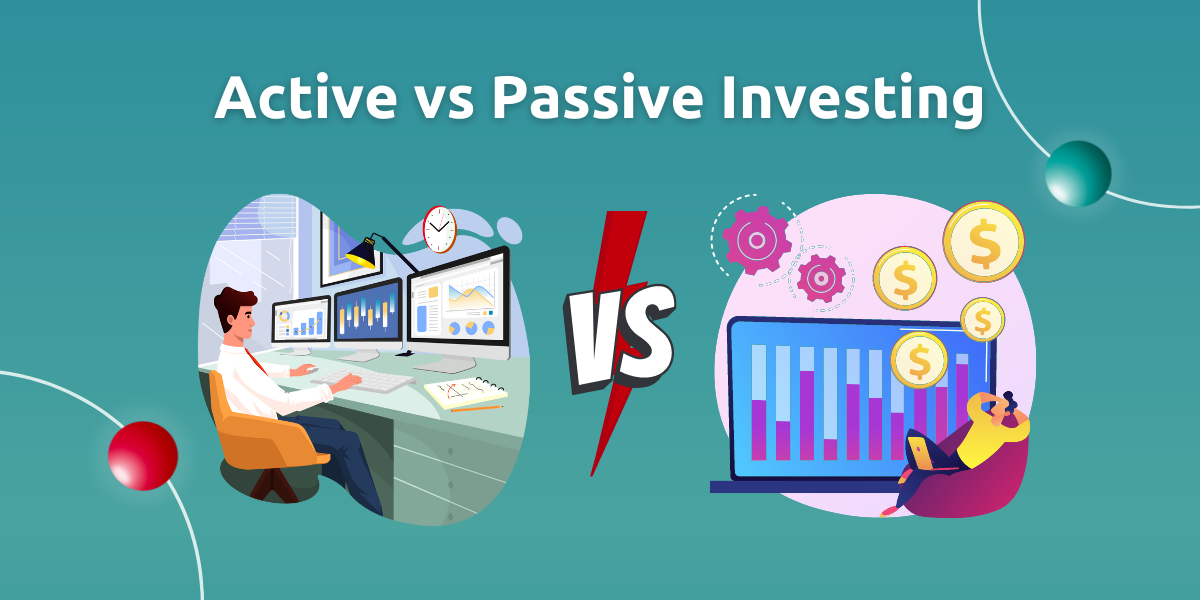
When you first enter the world of investing, you’re immediately faced with a fundamental choice in philosophy: should you be an active investor or a passive investor?
The financial industry spends billions of dollars to make this choice seem complex and confusing. They want you to believe you need their expensive expertise to navigate it.
The truth is much simpler. For the vast majority of investors, one path is statistically, logically, and emotionally superior. Let’s cut through the noise and get to what actually works.
The Sports Analogy: The Scout vs. The League Owner
To understand the difference, let’s think in terms of sports.
Active Investing is like being a talent scout. Your job is to analyze thousands of players, trying to find the few undiscovered superstars who will outperform everyone else. It’s a difficult, full-time job that requires immense skill, a little bit of luck, and a massive travel budget (or in investing terms, high fees). When you’re right, the payoff can be huge. When you’re wrong, you’ve wasted a lot of time and money.
Passive Investing is like being the league owner. You don’t bet on individual players or teams. Instead, you simply buy a small ownership stake in the entire league. If the league as a whole becomes more popular and profitable, you make money. You don’t care which team wins the championship because you own a piece of all of them.
The Case Against Active Investing
The “scout” approach sounds exciting, but it has two massive, often insurmountable, problems:
- Crippling Fees: Active fund managers and their research teams are expensive. They charge high management fees, often 1% or more of your investment, every single year. As we’ve discussed, a simple passive strategy can cost as little as 0.04%. This fee difference creates a huge hurdle that active managers must overcome just to match the market’s performance, let alone beat it.
- The Overwhelming Evidence: Study after study, year after year, confirms the same thing: over any long-term period (10-20 years), approximately 90% of active fund managers fail to outperform their passive benchmark index. They are, as a group, simply not worth the high fees they charge.
Think about that: you have a 9-in-10 chance of paying extra for worse results. It’s like paying for a first-class ticket and being given a seat in the cargo hold.
The Simple, Powerful Logic of Passive Investing
The “league owner” approach is built on a humble and powerful truth: it is incredibly difficult to beat the market, so the most logical thing to do is become the market.
By using low-cost index funds or ETFs, you are simply buying a slice of the entire market. You are guaranteed to capture the market’s full return, harnessing the power of broad diversification and long-term economic growth.
Your success isn’t dependent on a manager’s genius; it’s dependent on the long-term success of the global economy. This is a much safer and more reliable bet.
This Isn’t a Compromise; It’s the Smarter Choice
Choosing passive investing is not “settling.” It is making a conscious, evidence-based decision to side with the statistical odds. It’s acknowledging that the most effective way to build wealth isn’t through frantic activity, but through disciplined consistency and the magic of compound interest.
As a busy professional, you don’t have time to be a full-time talent scout. Adopting a passive strategy allows you to build wealth on autopilot, freeing you to focus on your career, your family, and your life.