Finding the best investment apps for beginners in the US can be overwhelming, but a handful of platforms clearly stand out for low fees, ease of use, strong education, and beginner‑friendly features like automation and fractional shares
How This List Was Chosen
To find the best investment apps for beginners, this guide synthesizes rankings and detailed reviews from major US personal‑finance publications plus real‑user feedback.
Sources include US News, Business Insider, Forbes Advisor, Yahoo Finance, SmartAsset, StockBrokers.com, and large Reddit threads where beginners share what worked for them.
Apps were evaluated on cost, minimums, account types, automation options, ease of use, educational content, customer support, and suitability specifically for US beginners.
Best Investment Apps for Beginners: Quick Summary
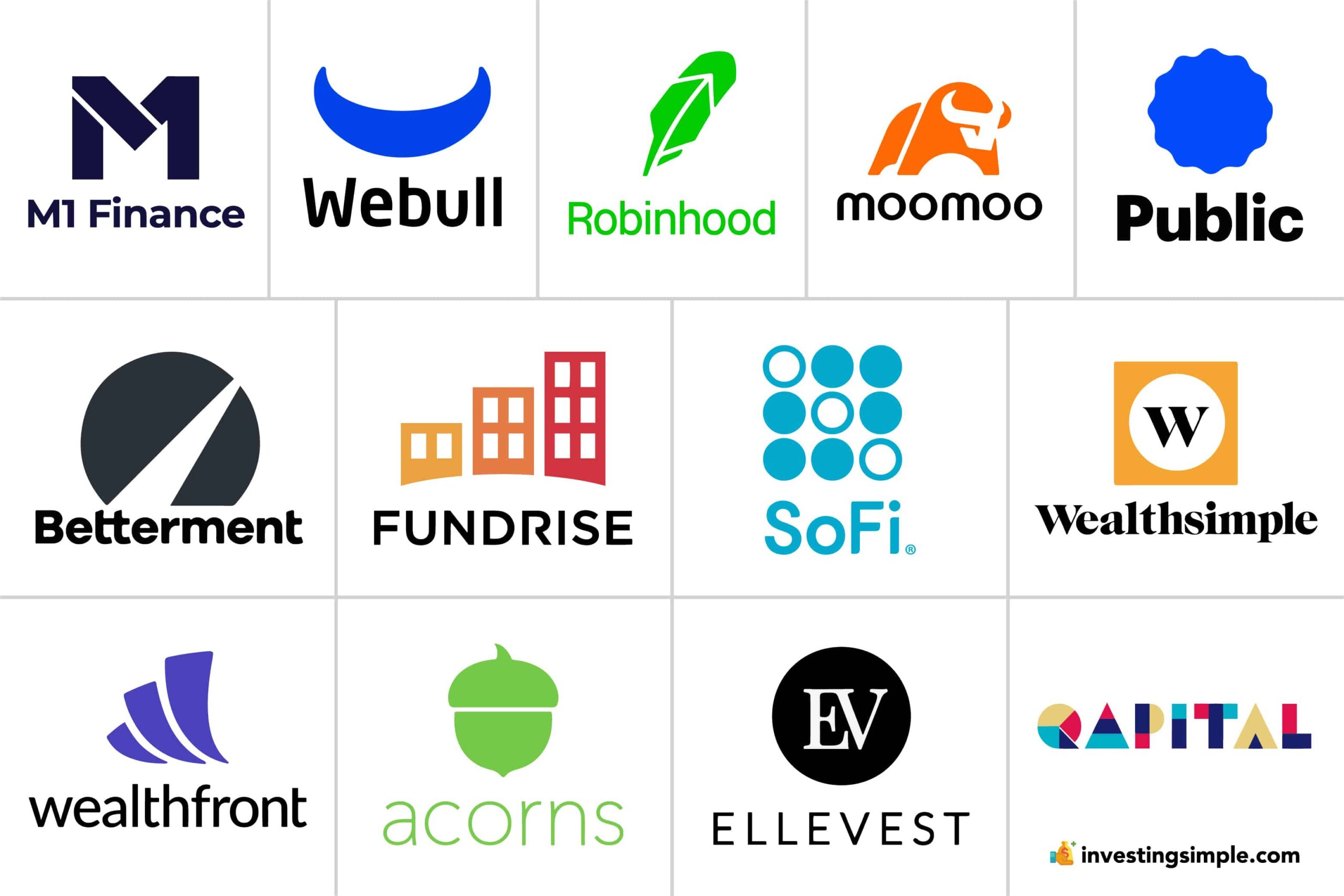
- SoFi Active Invest – best overall investment app for US beginners who want low cost plus built‑in planning help.
- Fidelity – best full‑service investment app for beginners who want long‑term retirement investing and powerful tools with rock‑bottom costs.
- Robinhood – best for beginners who prioritize a simple, mobile‑first trading experience and commission‑free stock and ETF trades.
- Charles Schwab – best for beginners who want a traditional broker with great research, support, and no‑fee stock and ETF trades.
- Acorns – best for true beginners who want “set‑and‑forget” micro‑investing that rounds up purchases and invests automatically.
- Betterment – best for new investors who prefer a robo‑advisor to build and manage a diversified portfolio for them.
- Vanguard – best investment app for beginners focused on retirement and low‑cost index funds over trading.
- Ally Invest – best for beginners who want a low‑cost self‑directed platform integrated with Ally Bank for cash management.
- Public – best for beginners who like a social, educational investing feed alongside commission‑free trading.
- Webull – best for beginners who expect to grow into more advanced charting and research tools over time.
1. SoFi Active Invest – Best Overall for Beginners
SoFi Active Invest is consistently rated one of the best investment apps for beginners thanks to its ultra‑low costs, simple interface, and access to human financial planners.
You can start investing with as little as $5, trade US stocks and ETFs with zero commissions, and even use SoFi’s free automated portfolios if you want a robo‑advisor to manage ETFs for you.
SoFi’s app integrates banking, lending, budgeting, and investing, making it attractive for beginners who want one financial hub rather than juggling multiple apps.
A major differentiator is that SoFi offers unlimited access to financial planners for many users, which is rare among beginner‑focused investment apps.
Best for: US beginners who want an all‑in‑one app with low minimums, $0 commissions, and guidance as they learn.
2. Fidelity – Best Full‑Service App for Long‑Term Beginners
Fidelity’s mobile app and platform are frequently named among the best investment apps due to a rare combination of $0 fees, huge investment selection, and strong educational resources.
Beginners can open accounts with no minimum, trade US stocks and ETFs commission‑free, buy fractional shares, and access thousands of low‑cost index and mutual funds.
Fidelity is particularly strong for retirement investors because it offers excellent 401(k) rollovers, IRAs, target‑date funds, and planning tools in one ecosystem.
The app includes robust research, screeners, and learning content, but still remains approachable enough for new investors who plan to grow into more advanced features over time.
Best for: Beginners who want a long‑term “home base” broker for retirement, taxable investing, and education rather than purely a trading app.
3. Robinhood – Best Mobile‑First App for New Traders
Robinhood is one of the most recognizable beginner investment apps, largely responsible for popularizing commission‑free stock trading in the US.
Beginners like Robinhood because the app is extremely simple, fast to open, and offers $0 commissions on stocks, ETFs, options, and crypto with no account minimum.
Fractional shares are available, so new investors can buy small pieces of expensive stocks with just a few dollars, which is ideal for starting small.
Critics note that Robinhood’s simple interface can encourage frequent trading and speculation, and its research/education offerings are weaker than full‑service brokers.
Best for: Beginners who want an ultra‑simple, mobile‑first trading experience and understand the need to self‑manage risk and behavior.
4. Charles Schwab – Best for Support and Research
Charles Schwab’s app combines $0 commissions with strong research, customer support, and a full range of account types, making it a top choice for beginners who want a traditional broker feel.
Novice investors can open individual or joint brokerage accounts, IRAs, and even 529 education accounts, all within a single ecosystem.
Schwab offers $0 stock and ETF trades, fractional share investing through Schwab Stock Slices, and a wide lineup of low‑cost index funds and ETFs.
The app gives access to solid research, market news, and planning tools, which helps beginners learn while they invest.
Best for: US beginners who want a reputable, well‑supported broker with plenty of education and long‑term investing options.
5. Acorns – Best Micro‑Investing App for True Beginners
Acorns is often singled out as one of the best investment apps for beginners who feel overwhelmed and want everything automated.
The app links to your debit or credit cards, rounds up everyday purchases to the nearest dollar, and invests the spare change into diversified ETF portfolios.
Beginners can also set recurring deposits, choose between conservative and aggressive portfolios, and let Acorns handle rebalancing and diversification.
Acorns charges a small flat monthly subscription instead of a percentage‑of‑assets fee, which is simple but can be relatively expensive on very small balances.
Best for: US beginners who want a “set‑and‑forget” micro‑investing app that makes starting completely automatic.
6. Betterment – Best Robo‑Advisor App for Hands‑Off Beginners
Betterment is one of the original robo‑advisors and remains a top pick for beginners who want a professional‑quality portfolio without picking their own investments.
The app builds a diversified ETF portfolio based on your goals and risk tolerance, automatically handles rebalancing, and can add tax‑loss harvesting in taxable accounts.
Fees are charged as a percentage of assets under management, generally lower than traditional advisors but higher than pure self‑directed brokers.
Betterment also offers goal‑based planning features and optional access to human advisors, which is valuable for beginners who want guidance.
Best for: Beginners who prefer a fully automated, goal‑based investing experience and are willing to pay a modest advisory fee.
7. Vanguard – Best for Retirement‑Focused Beginners
Vanguard’s app is built around the company’s famous low‑cost index funds and ETFs, which are widely recommended for building long‑term wealth.
Beginners can use Vanguard to open IRAs and taxable accounts and invest in target‑date retirement funds or simple index fund portfolios.
The app is less trading‑oriented and more geared toward buy‑and‑hold investing, which aligns well with what most beginners actually need.
User reviews often note that Vanguard’s app is improving but still less sleek than some competitors, so it suits investors who value low costs over fancy design.
Best for: US beginners focused on retirement and index‑fund investing, not frequent trading.
8. Ally Invest – Best for Bank‑Linked Beginners
Ally Invest is recommended by multiple outlets as a strong choice for beginners who also bank with Ally and want investing tightly integrated with their cash accounts.
The app offers self‑directed trading with $0 commissions on US stocks and ETFs and low‑cost robo‑portfolios for those who prefer automation.
Ally’s tax‑optimized automated portfolios and intuitive interface make it appealing to new investors balancing savings, banking, and investing.
Being able to move money instantly between Ally Bank and Ally Invest is convenient for beginners building an emergency fund alongside their investments.
Best for: Beginners who already use Ally Bank or want seamless banking‑investing integration with strong mobile tools.
9. Public – Best for Social and Educational Investing
Public’s investing app blends commission‑free trading with a social feed where users can see others’ portfolios and commentary, which many beginners find educational.
You can buy fractional shares of stocks and ETFs with small amounts, and the app emphasizes community discussions and learning content around investing.
Public has marketed itself as more beginner‑friendly and socially conscious than pure trading apps, with features designed to highlight long‑term investing over day trading.
Reddit discussions suggest beginners like Public’s educational angle but caution that social feeds can still tempt users to follow trends uncritically.
Best for: New investors who learn best through community and want a more social investing experience.
10. Webull – Best for Beginners Who Want Room to “Grow Up”
Webull offers $0 commissions, $0 account minimums, and advanced charting tools, making it a hybrid between a beginner app and a pro‑style platform.
Beginners appreciate that Webull offers fractional share investing and paper trading (simulated trading) to practice before risking real money.
The flip side is that the app’s advanced charts and options tools can be overwhelming if you truly want the simplest possible experience.
Community and expert reviews note that Webull is a better fit for beginners who are curious about technical analysis and might eventually trade more actively.
Best for: Beginners who want free trading now and might grow into more advanced strategies later.
Side‑by‑Side Comparison of Top Beginner Investment Apps
How to Choose the Best Investment App as a Beginner
Even among the best investment apps for beginners, the right choice depends on how you prefer to invest and learn.
If you want everything automated, a robo‑advisor like Betterment or the automated options at SoFi, Schwab, or Acorns will probably make investing feel less intimidating.
If you are excited to pick your own ETFs or stocks but still prioritize simplicity, SoFi, Fidelity, or Robinhood may feel more natural.
Beginners who value education and support should lean toward Fidelity, Schwab, or Public, all of which emphasize learning resources or community insight.
Also consider whether you need retirement accounts (IRAs), taxable brokerage, or both, because not every app supports all account types equally well.
FAQs About Investment Apps for Beginners
1. Do I need a lot of money to start with these apps?
Most of the best investment apps for beginners in the US let you start with very little—often $0 to open and $5–$10 to place your first trade or fund your portfolio.
Apps like Acorns, SoFi, Robinhood, Public, and Webull all focus on low minimums and fractional shares so beginners can ease in gradually.
2. Are beginner investment apps safe?
Top US investment apps work with regulated broker‑dealers, use SIPC protection for securities up to standard limits, and employ bank‑level encryption.
As a beginner, your main risk is not the app failing but making emotional or speculative trades, which is why automation and education are so valuable.
3. Which app is best if I just want everything on autopilot?
If your goal is fully hands‑off investing, Betterment, Acorns, SoFi’s automated portfolios, Schwab Intelligent Portfolios, and Vanguard’s Digital Advisor or target‑date funds are strong options.
These apps create diversified ETF portfolios for you, rebalance automatically, and often include goal‑based planning tools.
4. Which app is best if I want to learn to pick my own investments?
Fidelity, Schwab, SoFi, Public, and Webull all give beginners $0 stock and ETF trading plus varying levels of research, education, and community content.
If you value strong research and education, Fidelity and Schwab stand out, while Public and Reddit‑endorsed choices like SoFi and Webull offer more social and tool‑driven learning.
5. Can I have accounts with more than one investment app?
Yes, many US investors use different apps for different purposes—for example, Vanguard for retirement accounts, SoFi or Fidelity for general investing, and Acorns for micro‑investing.
The important thing is to keep a clear overall plan so you do not accidentally duplicate efforts or drift into riskier trading than you intended.
By focusing on low fees, simple interfaces, strong education, and automation where needed, these best investment apps for beginners can help you build a diversified portfolio and long‑term investing habit without feeling overwhelmed.