What’s the most powerful force in the universe? Albert Einstein is often quoted as saying it’s compound interest.
That might sound like an exaggeration, but it’s closer to the truth than you think. Understanding this one single concept is the key that unlocks true, automated wealth building. It’s how you get your money to start working for you, instead of you always working for it.
As busy professionals, our time is our most limited resource. Compound interest is the tool that allows us to build wealth without trading more of our time. Let me explain with a simple analogy.
The Snowball Effect
Imagine you’re at the top of a big, snowy hill. You scoop up a handful of snow and pack it into a small snowball. That’s your initial investment—your “principal.”
You give it a little push and it starts rolling.
As it rolls, it picks up more snow, getting slightly bigger. As it gets bigger, it picks up even more snow with each rotation. The further it rolls, the faster it grows. By the time it reaches the bottom of the hill, your tiny, hand-sized snowball has become a giant, unstoppable boulder.
That’s compound interest. It’s the process of earning returns on your returns.
Your initial investment earns interest. Then, the next period, you earn interest on both your initial investment and the interest you just earned. Your money snowballs.
The Math is Magical: A Real-World Example
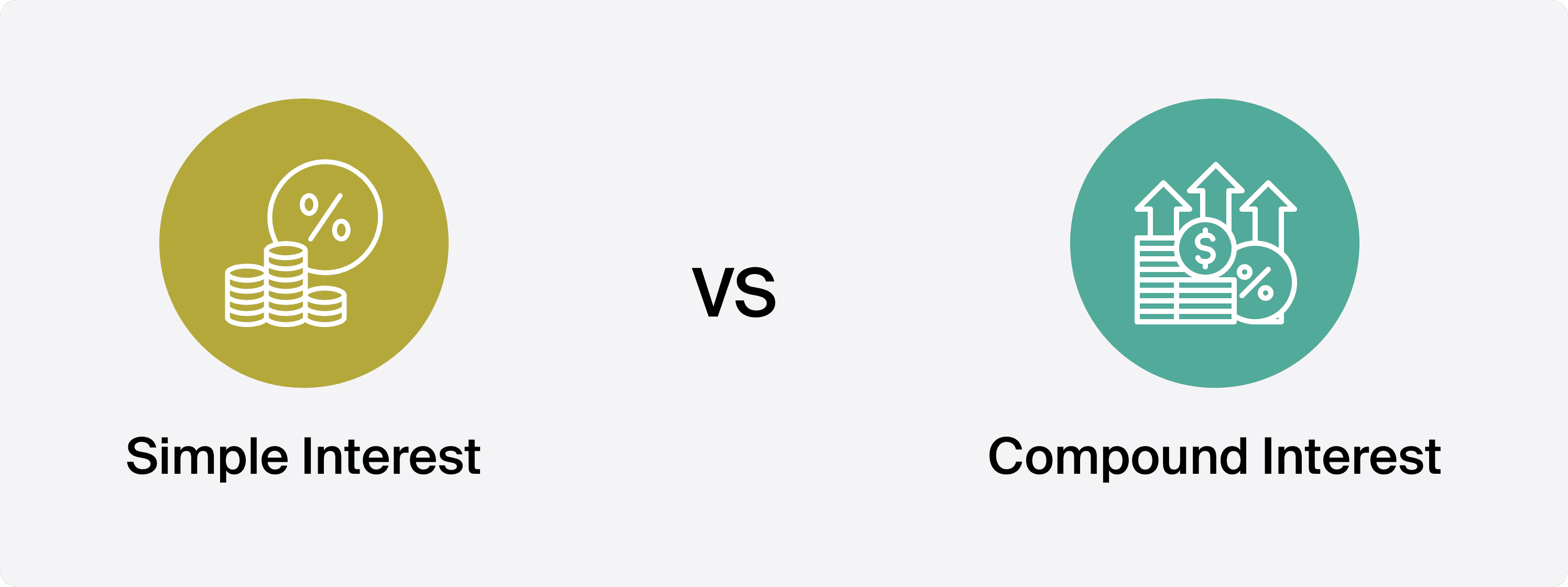
Let’s look at the difference between simple interest and the magic of compounding.
Imagine you invest $10,000 and it earns a 7% annual return.
Scenario 1: Simple Interest (Your money isn’t really working for you) With simple interest, you only earn interest on your initial $10,000.
- Year 1: You earn $700. Total = $10,700
- Year 2: You earn $700. Total = $11,400
- …after 20 years, you’d have $24,000. Not bad.
Scenario 2: Compound Interest (Your snowball is rolling) With compound interest, you earn interest on the new total each year.
- Year 1: You earn $700. Total = $10,700
- Year 2: You earn 7% on $10,700, which is $749. Total = $11,449
- Year 3: You earn 7% on $11,449, which is $801. Total = $12,250
- …after 20 years, your snowball has grown to $38,697.
That’s over $14,000 more just by letting your returns generate their own returns. You didn’t have to invest another dollar. You just let the system work. This effect becomes even more dramatic over longer periods and with regular contributions. This is how people build million-dollar retirement accounts while sleeping.
How to Activate Your Snowball
So, how do you put this incredible force to work?
You can’t achieve this in a savings account where the interest rate is lower than inflation. You need to own assets that have the potential to grow at a healthy rate.
The simplest and most effective way to do this is by investing in a diversified basket of stocks that represent the broad market. This is where the power of ETFs (Exchange-Traded Funds) comes in. They allow you to own hundreds of companies in a single, low-cost investment, making them the perfect vehicle to start your snowball rolling down the hill.
Your Next Step: You now know the “why” (inflation) and the “how” (compounding). The next logical step is to understand the “what.”